Ghana is preparing to bring coding, artificial intelligence and electronics into basic education, potentially giving children exposure to emerging technologies years earlier than previous generations.
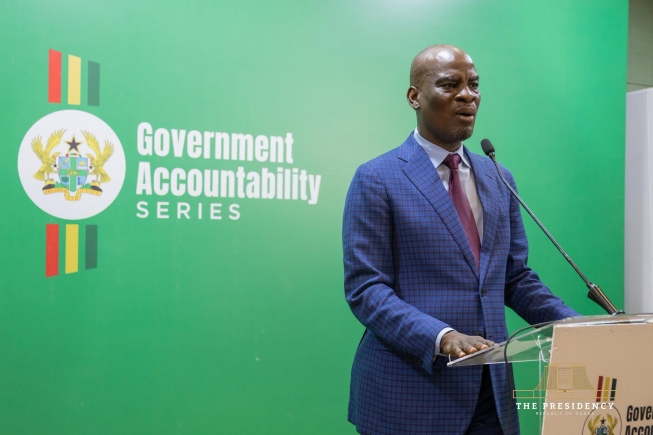
The Minister of Education, Haruna Iddrisu, announced the planned curriculum changes during a Government Accountability Series press briefing in Accra on July 20, 2026.
Under the revised curriculum being developed by the National Council for Curriculum and Assessment (NaCCA), pupils from Kindergarten through Junior High School are expected to study coding, artificial intelligence and electronics.
The proposed changes are part of what the Education Ministry describes as a “smart start curriculum”, designed to strengthen science, technology, engineering and mathematics education at the basic-school level.
From the classroom to the code editor
For many Ghanaian students, exposure to programming and electronics has traditionally come through extracurricular programmes, robotics clubs, coding communities and private training programmes.
The proposed curriculum would move some of that learning into the formal education system.
According to Iddrisu, the government had previously announced plans to introduce AI, robotics, coding and electronics into basic education during a digital education conference in Accra in June.
The National Curriculum Review Committee has since completed its work, with the revised curriculum now entering the approval process.
It will need approval from Cabinet before being laid before Parliament for consideration.
The bigger question is implementation
The announcement is significant, but the curriculum itself is not yet being implemented.
The Ministry of Education has not announced when schools will begin teaching the new subjects. It has also not yet provided details on how teachers will be trained to teach areas such as artificial intelligence, coding and electronics.
That raises practical questions about what the rollout will look like.
A curriculum that introduces coding to a classroom needs more than a syllabus. Teachers need the skills to teach it. Students need access to appropriate learning materials and devices. Schools need the infrastructure to support practical learning.
There is also the question of access.
If schools with computer laboratories and reliable connectivity can provide hands-on technology education while schools with limited infrastructure cannot, the reform could produce very different experiences for students depending on where they attend school.
Why starting early matters
The proposed curriculum also signals a broader shift in how technology education could be approached in Ghana.
Rather than waiting until university or specialised training to encounter programming and emerging technologies, children could begin developing these skills during their formative years.
At that stage, the goal does not necessarily have to be turning every child into a software engineer.
It can be about helping students understand how technology works, how to create with it, how to think computationally and how to use AI responsibly.
The curriculum is also expected to include greater attention to civic ethics, responsibility and the responsible use of public resources.
That combination matters as AI becomes increasingly present in education, work and everyday life.
The announcement is only the beginning
Ghana’s proposed move to introduce AI, coding and electronics into basic education could reshape how the next generation encounters technology.
But the real measure of the policy will not be the announcement.
It will be what a child actually experiences when they sit in a classroom.
Can they write their first lines of code? Build a simple electronic project? Understand what an AI system can and cannot do? Ask questions about the technology shaping their world?
Those outcomes will depend on the curriculum, teacher preparation, infrastructure and how consistently the programme is implemented across the country.
For now, Ghana has announced the direction. The next chapter is turning that direction into something students can experience in the classroom.
What would you have wanted to learn about technology when you were in basic school?
Stay connected with Kweku Tech: Join our WhatsApp community for links and more stories from Ghana’s tech ecosystem.
Join the Kweku Tech WhatsApp Channel