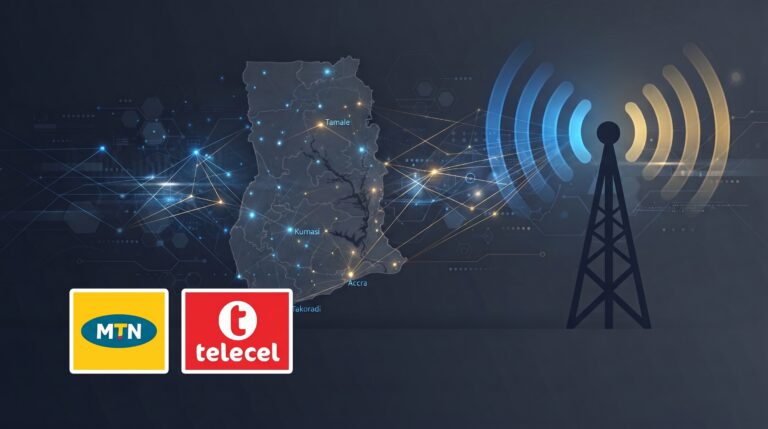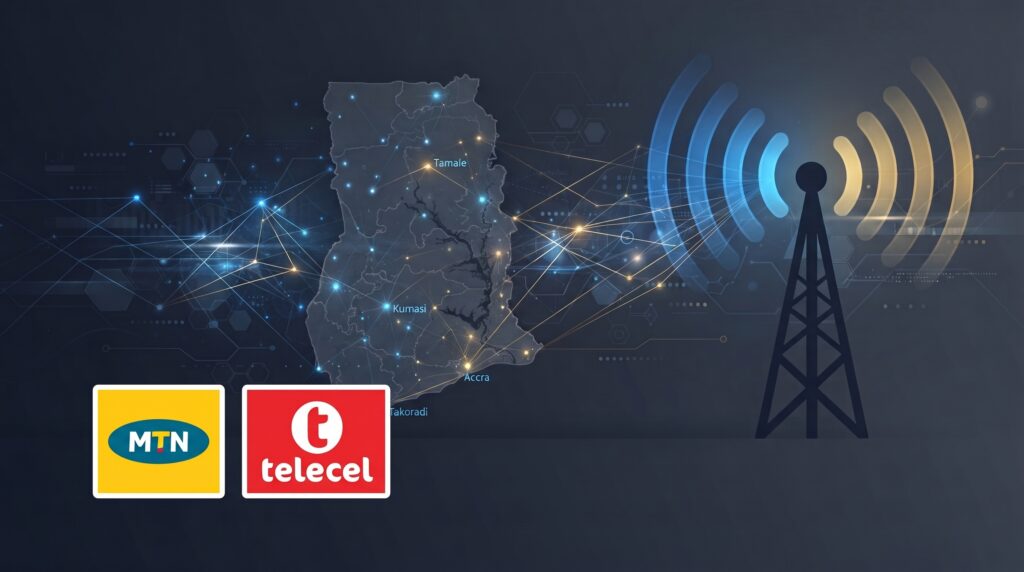
Ghana’s 5G exclusivity deal with Next Gen InfraCo is over. The National Communications Authority has stripped NGIC of its exclusive rights to build the country’s 5G network, eight years before the concession was due to expire. MTN and Telecel now plan to enter the space.
What Happened
In 2024, the previous government awarded Next Gen InfraCo (NGIC) exclusive rights to deploy Ghana’s 5G infrastructure. NGIC built the arrangement as a wholesale model, in partnership with Reliance Industries’ Radisys. Under the deal, NGIC would construct and operate one shared national network, and mobile operators would deliver retail service on top of it. The concession was set to run until 2034.
By March 2026, the numbers told a different story. NGIC had built only 49 operational 5G sites nationwide. Most sat in Greater Accra. The company’s target was 1,200 sites by 2027. The NCA also disclosed that NGIC owed money on its licence fee instalments, part of a $125 million obligation tied to the licence.
The Regulatory Process Behind Ghana’s 5G Exclusivity Decision
On March 4, 2026, the NCA issued a formal Notice of Proposed Licence Amendment under Section 14 of the Electronic Communications Act, 2008 (Act 775). The notice removed the exclusivity clause from NGIC’s licence. The Authority said the change would promote competition and innovation, improve consumer choice and service quality, speed up nationwide digital transformation, and ensure efficient use of spectrum as a national resource.
NGIC filed a formal objection. The NCA board reviewed that objection before reaching a final decision. NCA Director-General Rev. Ing. Edmund Yirenkyi Fianko confirmed the review, and described it as a legal requirement to give the licence holder a fair hearing. The amendment did not take effect automatically. It followed the statutory review period the law requires.
What Comes Next
MTN Ghana and Telecel have both confirmed to Bloomberg that they plan to bid once an open spectrum auction opens. The auction is expected to launch within weeks. Spectrum in the 3.5GHz and 26GHz bands will go up for bid.
Telecel Group CEO Moh Damush raised a concern about how the auction should work. He cautioned against a process that simply favours the highest bidder, warning that outcome could deepen the advantage Ghana’s already dominant operators hold.
Government has tied this shift to a bigger coverage goal: 70% 5G population coverage by Ghana’s 70th independence anniversary in 2027. Both NGIC’s leadership and the sector minister have referenced this target publicly.
The Bigger Picture
NGIC’s original model had real merit. A single shared network can, in theory, cost less and deploy faster than each operator building separate infrastructure. Two years in, the execution did not match the ambition. Government is now trusting two operators with existing networks and capital to deliver what a single wholesale provider could not.
Will an open auction get Ghanaians closer to working 5G coverage than an exclusive concession did? That question stays open for now.
Has 5G actually reached your part of Ghana, or does it still feel like a headline? Join the conversation on our WhatsApp channel and tell us what connectivity looks like where you live. For more read Why Fraud Is Holding Back Ghana’s Digital Economy